La Grande Caraïbe expliquée, analysée et racontée autrement

At Last – Martinique Will Sit, In Its Own Name, at CARICOM

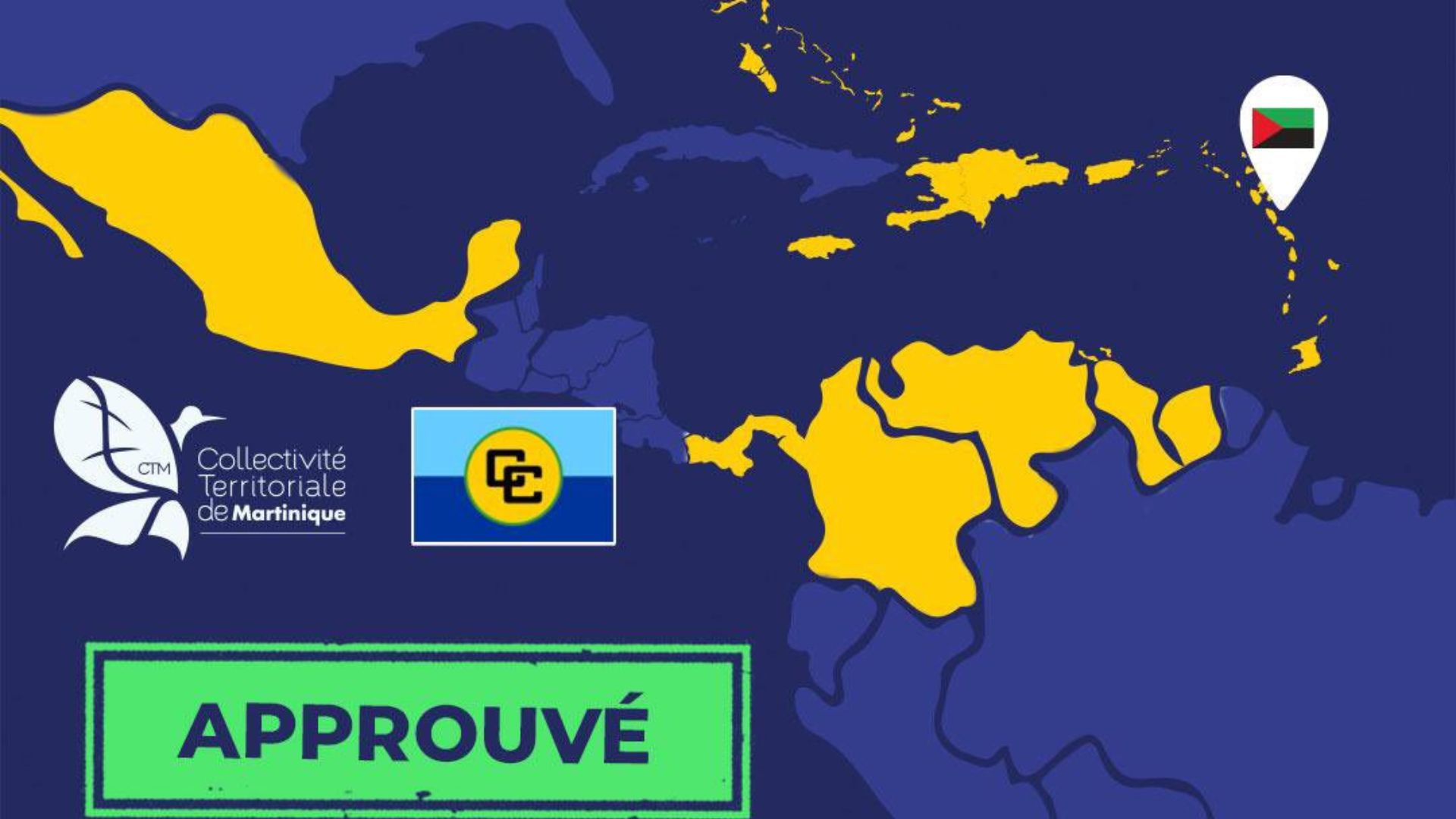
What just happened in the French Parliament on 16 April is genuinely exceptional: for the first time in its history, Martinique has a legal framework allowing it to sit, in its own name, within an international regional body.
What Has Actually Changed?
It is important to understand what this associate membership of the Caribbean Community (CARICOM) really means. Martinique has not become an independent state — it remains a French territory, subject to European law and the sovereignty of Paris. However, it has gained something unprecedented: its own voice in Caribbean forums, alongside the heads of state and government of the region.
In concrete terms, this means participating in meetings of the CARICOM Conference of Heads of Government, accessing regional cooperation mechanisms (health, education, food security, disaster management), and asserting itself as a diplomatic actor within the Caribbean – no longer simply a French overseas department watching the region from its balcony.
A Long and Methodical Process
This outcome did not happen overnight. It took more than 60 years of Martinican political engagement, a signing ceremony in Barbados in February 2025, validation by the Conseil d’État, a unanimous Senate vote in January 2026, and finally this vote by the National Assembly.
At each stage, institutional obstacles had to be overcome – notably the delicate question of privileges and immunities under international law, which required formal parliamentary ratification.
This is not an improvised decision. It is the culmination of patient diplomatic work carried out by the Collectivité Territoriale de Martinique (CTM), with a tenacity that deserves recognition.
The Geopolitical Stakes: A Caribbean Redefining Itself
This membership comes at a moment of significant change across the Caribbean. CARICOM, founded in 1973, today brings together 15 member states and 5 associate members. It is managing an expanding range of challenges: food security in the face of climate crises, digital sovereignty, hurricane resilience, trade negotiations with the European Union and the United States, and the new geopolitical tensions emerging across the region.
By joining this bloc as an associate member, Martinique is not simply taking a seat at the table. It brings with it something few CARICOM members possess: direct access to the European market, European structural funds, and membership of the eurozone.
These assets could make Martinique a bridge between Europe and the Caribbean – a role that is unprecedented and potentially strategic.
Tangible Benefits for Martinicans
Beyond the symbolism, what concrete outcomes can be hoped for?
Economically, regional integration opens up new prospects for Martinican businesses: easier access to neighbouring island markets, and sectoral cooperation in tourism, agriculture, and renewable energy. Exchanges with Guadeloupe, Haiti, Trinidad and Tobago, and Jamaica could take on a new institutional dimension.
In terms of crisis management, the Caribbean is one of the most hurricane- and earthquake-prone regions in the world. Associate membership of CARICOM also means joining regional solidarity and disaster response mechanisms, such as the Caribbean Disaster Emergency Management Agency (CDEMA).
Culturally and in terms of identity, this membership enshrines a reality that many Martinicans live every day: they are Caribbean before they are French. This is not a declaration of independence – but it is a recognition of the island’s geographic, cultural, and human rootedness in its natural environment.
The Limits and the Questions That Remain
This step forward should not obscure the complexities that remain. Associate membership is, by definition, less powerful than full membership. Martinique will be able to participate, observe, and speak – but it will not carry the same voting weight as sovereign states.
Moreover, the permanent tension between French belonging and Caribbean aspiration is not resolved by this vote. Paris has accepted the move, but will always retain a say over the international commitments of its territories. How will Martinique navigate moments when French interests and those of CARICOM diverge? That is an open question, and one that will require considerable political dexterity.
Finally, the next milestone is already set: the CARICOM summit in Saint Lucia in July 2026. This will be Martinique’s first official appearance in this forum – a chance to see, in practice, what this status is actually worth.