La Grande Caraïbe expliquée, analysée et racontée autrement

The Cables That Govern the Digital Caribbean

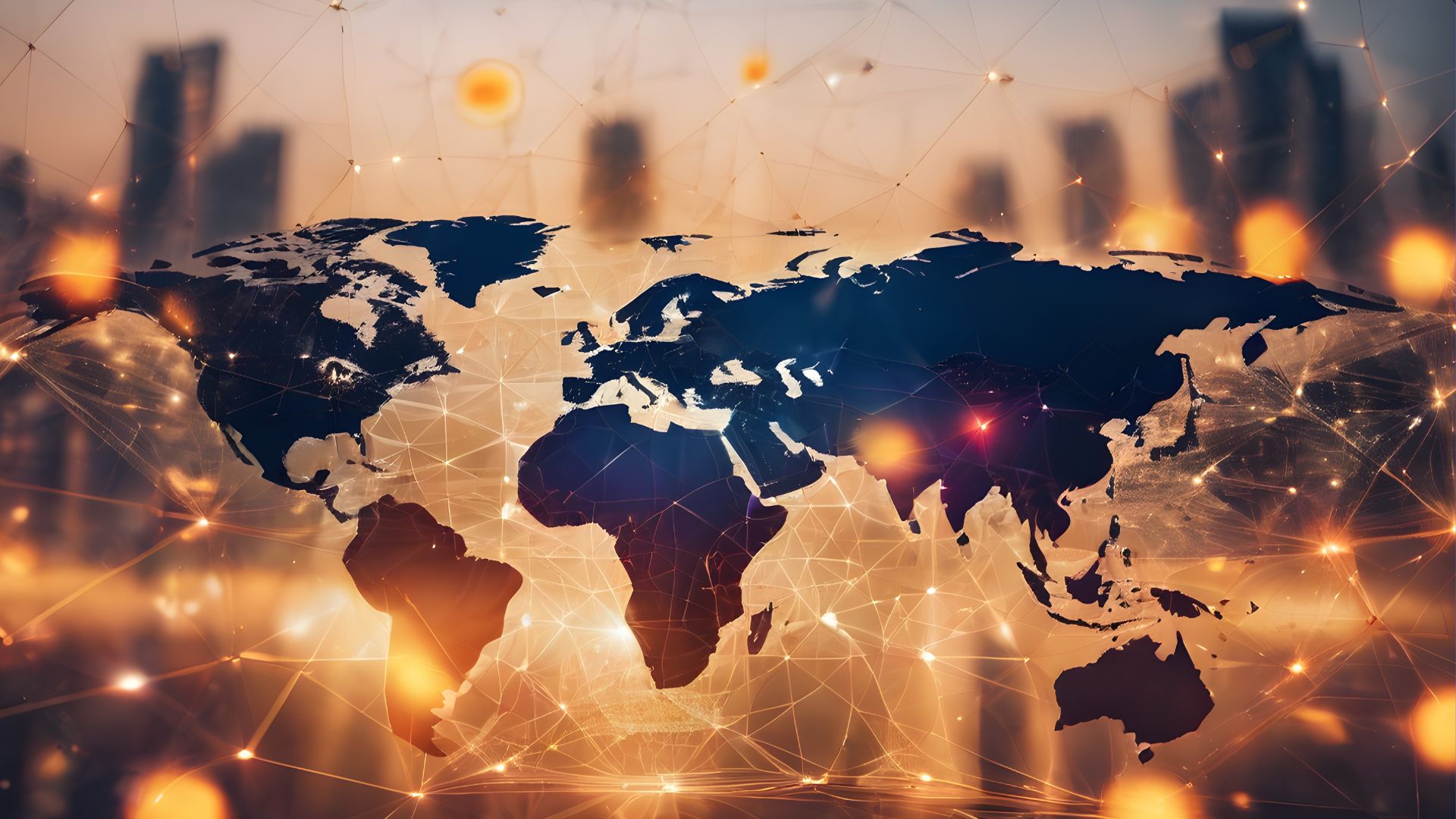
Beneath the turquoise waters of the Caribbean, thousands of metres below the surface, lies an infrastructure on which the digital sovereignty of millions of people depends. Fibre optic cables no wider than a garden hose carry 99% of the region’s internet traffic. Their routes, their owners, their points of failure: these are as much political questions as technical ones.
An Infrastructure Inherited From the 1990s
The general public often does not realise that the internet is not « in the air. » Satellites handle only a tiny fraction of it. The reality is underwater.
For the Caribbean, it all begins with ARCOS-1, commissioned in 2001: a fibre optic ring spanning several thousand kilometres, connecting Florida to around twenty landing points from Cuba to Colombia, passing through Haiti, the Dominican Republic, and Jamaica. Then came Americas-II, designed to connect North America to Brazil via the Lesser Antilles. These two systems still form the backbone of the regional network today.
Built during a period of telecoms deregulation, these cables were financed by consortiums of major telephone companies — AT&T, France Télécom, Cable & Wireless. The model was straightforward: share costs among private operators, with each participant receiving capacity proportional to their investment. States were merely observers.
The Digital Archipelago: Glaring Connectivity Inequalities
Behind the map of cables lies an unequal reality.
Puerto Rico, a regional hub, concentrates several landing points and benefits from satisfactory redundancy. Trinidad plays a similar role for the southern Caribbean. But islands such as Montserrat, Anguilla, and parts of Haiti are connected by a single cable alone. One incident — a ship’s anchor, an underwater landslide, an accidental fishing catch — is enough to cut an island off from the world.
It is precisely to reduce these vulnerabilities that new initiatives have emerged. The Southern Caribbean Fiber now connects Trinidad, Barbados, Martinique, and Puerto Rico with regional resilience in mind, allowing traffic to flow between neighbouring islands without routing through Miami.
The Deep Blue Cable, more recent, targets small island economies specifically. And the CARCIP programme, supported by the World Bank, funds not cables themselves but the governance surrounding them: national policies, secured landing points, and regulator training.
Miami: The Invisible Capital of the Caribbean Internet
There is a geographic irony at the heart of Caribbean internet architecture: until recently, a message sent from Fort-de-France to Pointe-à-Pitre — less than 200 kilometres away — was routed through servers located in Miami. This configuration is not a technical accident. It reflects an economic and political organisation in which the United States occupies the centre of the network, while the islands remain its periphery.
The consequences are tangible. Data from Caribbean public administrations, hospitals, and banks transit through infrastructure subject to American law. The Cloud Act of 2018 allows US authorities to compel American companies to provide access to data stored anywhere in the world.
For a Caribbean state whose servers are hosted on American soil or in an American data centre, digital sovereignty is, in practice, limited.
Big Tech Enters the Game
The landscape is shifting under the force of a new phenomenon: the entry of major digital corporations into the financing of submarine cables. Google, Meta, Amazon, and Microsoft are no longer simply users of these infrastructures. They are becoming their owners. According to specialist analysts, hyperscalers now control a growing share of global submarine cable capacity.
For the Caribbean, this means that dependence on Miami could soon be compounded by dependence on private actors whose logic is that of the market — not the public interest.
Toward Regional Digital Sovereignty?
Voices are being raised in favour of a different approach. CARICOM, the regional organisation of Caribbean states, has adopted digital strategies calling for greater control over infrastructure. Regional data centre projects are emerging in Barbados, Jamaica, and Trinidad. The idea: to stop routinely outsourcing data storage to Miami or the major American cloud providers, and instead build local capacity.
The obstacles are real. Small island economies lack reliable energy, capital, and specialist engineers. Resilience carries a cost that few states can bear alone. Yet the awareness is there. Submarine cables are no longer seen purely as technical pipes managed by engineers. They have become what they always truly were: strategic infrastructure, at the intersection of geography, politics, and economic power.