La Grande Caraïbe expliquée, analysée et racontée autrement

Understanding the Greater Caribbean, Beyond the Clichés

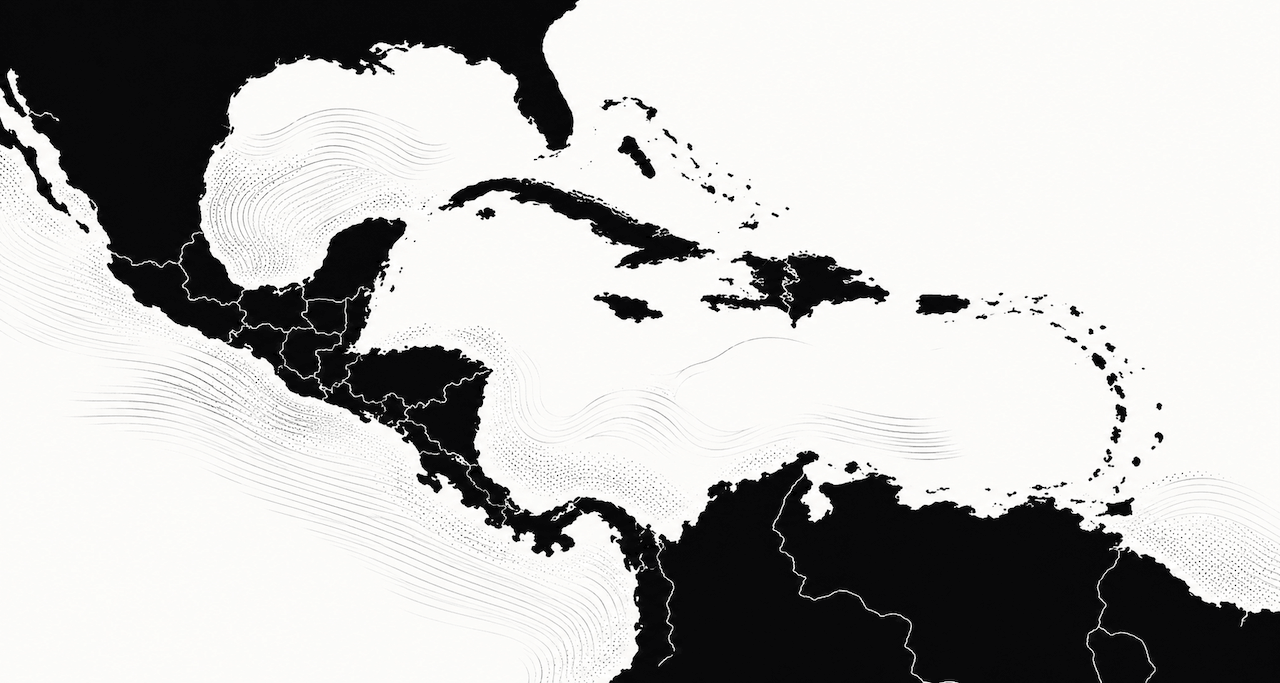
One foot on the American continent, the other in the Caribbean Sea. The Greater Caribbean is a singular composition, bringing together tiny islands and vast continental territories alike.
Its history is extraordinary and turbulent: shaped by slavery, colonial conquests, revolts, revolutions, and — for some territories — independence won through fierce struggle. It is also rich in its mixed-heritage populations, cross-cultural influences, and multiple languages, reflecting a shared legacy alongside profound differences.
This region faces many challenges: underdevelopment, persistent poverty, violence, political instability, as well as the devastating effects of climate change and constant exposure to natural hazards — earthquakes, hurricanes, volcanic eruptions, and rising sea levels. And yet, it continues to radiate energy and forge its own future.
What is the Greater Caribbean?
There is no single definition, but several authors help us better understand this world-region.
For geographer Romain Cruse, in Une géographie populaire de la Caraïbe (Éditions Mémoire d’encrier, 2014):
« This is the preferred framework of Caribbean advocates of a united region — one that is politically and economically strong at the regional level, and capable of influencing hemispheric affairs. This definition encompasses the island Caribbean, Venezuela, Colombia, and all of Central America, Mexico included. »
Pascal Buleon, in Atlas Caraïbe, takes a maritime approach:
« The Greater Caribbean is organized around the sea — across the 4.3 million km² of the Caribbean Sea and the Gulf of Mexico. This sea has been the vehicle for the historical, economic, political, and cultural construction of all these societies, for both their family resemblances and their variations and differences. It is an American Mediterranean. »
42 Territories
The Greater Caribbean brings together 42 territories, islands, and countries, spread across the Caribbean Sea, the Gulf of Mexico, and the continental coastlines.
Anguilla, Antigua and Barbuda, Aruba, Bahamas, Barbados, Belize, Bermuda, Bonaire, Colombia, Costa Rica, Cuba, Curaçao, Dominica, Grenada, Guadeloupe, Guatemala, Guyana, French Guiana, Haiti, Honduras, Cayman Islands, Turks and Caicos Islands, United States Virgin Islands, British Virgin Islands, Jamaica, El Salvador, Martinique, Mexico, Montserrat, Nicaragua, Panama, Puerto Rico, Dominican Republic, Saba, Saint-Barthélemy, Sint Eustatius, Saint Lucia, Saint Kitts and Nevis, Saint Martin, Saint Vincent and the Grenadines, Sint Maarten, Suriname, Trinidad and Tobago, and Venezuela.
A Strategic Concept
Talking about the Greater Caribbean is not merely an exercise for geographers or historians. It is a way of thinking about the future of a space defined by its fractures, but also by its interconnections.
Facing major powers — the United States, the European Union, China — the region can only carry weight by coming together. Regional integration, still unfinished, is a key lever for better defending shared interests: trade, energy, the environment, food security, and the movement of people.
Economically, the Greater Caribbean holds considerable assets:
- a strategic maritime zone, at the crossroads of major global trade routes
- exceptional biodiversity
- agricultural and mineral wealth
- unique tourism power, attracting tens of millions of visitors every year.
Yet this potential prosperity remains fragile:
- climate change
- rising sea levels
- increasingly destructive hurricanes are stark reminders of the region’s vulnerability.
- Social inequalities and the weight of the colonial past continue to fuel tensions and migration.
The Greater Caribbean is, in short, a laboratory of the contemporary world: traversed by global upheavals, yet also home to original experiences of resistance, creativity, and cooperation. This is what makes it a strategic region — but above all, a deeply human and inspiring one.
A Shared, Complex, and Painful History
The Greater Caribbean was one of the epicentres of European colonisation from the 15th century onward. Spanish, French, English, Dutch, and Danish powers clashed for control of sugar, coffee, cacao, and tobacco — and above all, for the enslaved labor brought from Africa.
This history has left deep marks:
- societies shaped by colonial hierarchies,
- struggles for freedom and equality,
- a cultural resilience that forged powerful Caribbean identities.
Every territory still carries today both the scars and the richness of that past.
A Linguistic and Cultural Mosaic
Linguistic diversity is one of the defining features of the Greater Caribbean.
- Official languages: Spanish, English, French, Dutch, Creole, and Papiamento, depending on the territory.
- Creole languages: born from contact between colonisers, enslaved Africans, and indigenous populations, they embody the creativity and cultural survival of Caribbean peoples.
Culturally, the region shines through its music (reggae, salsa, zouk, calypso, soca, gwoka), its cuisine, architecture, fashion, and deeply rooted traditions.
Exceptional Biodiversity… Under Threat
From the tropical forests of Belize to the mangroves of Guadeloupe, the Greater Caribbean is home to some of the world’s most unique biodiversity.
This wealth, however, is increasingly threatened by:
- climate change
- rising sea levels
- deforestation
- and marine pollution (including sargassum seaweed).
Protecting coastlines, sustainably managing marine resources, and accelerating the energy transition have become absolute priorities.
A Region of Strong Economic Potential
Often seen as fragile or dependent, the Greater Caribbean is also a strategic zone:
- 260 million inhabitants
- a combined GDP of over $1.2 trillion
- and a key geographic position, between the Americas and Europe.
Leading sectors include:
- sustainable tourism
- the blue economy (sea, fishing, marine energy)
- local agriculture and short supply chains
- digital innovation.
Toward Caribbean Unity?
Despite differences in language, history, and political status, the Caribbean has been seeking for decades to define itself as a whole.
Institutions such as the Caribbean Community (CARICOM), the Organisation of Eastern Caribbean States (OECS), and the Association of Caribbean States (ACS) work to strengthen regional economic and political ties.
Yet significant challenges remain:
- weak economic integration
- limited transport infrastructure
- dependence on major external powers
- political instability in certain areas.
Even so, the idea of a shared Caribbean identity is gaining ground, nourished by culture, exchange, and a connected younger generation.
Understanding the Greater Caribbean means embracing its complexity. It means looking beyond tourist clichés to grasp the historical, cultural, and geopolitical depth of this fascinating region. It also means recognising that, at the heart of its differences, the Greater Caribbean shares a common horizon: one of creativity and solidarity.