La Grande Caraïbe expliquée, analysée et racontée autrement

Who Owns the Caribbean Sea?

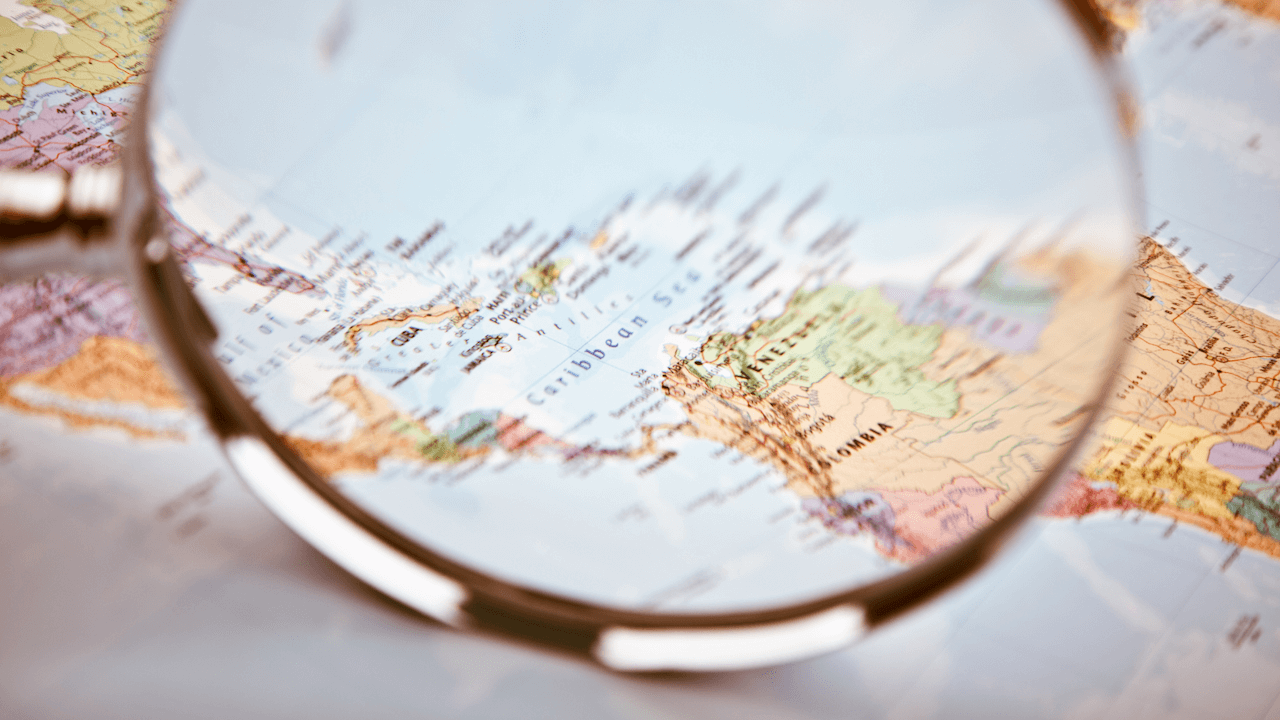
In recent weeks, the United States has carried out targeted strikes against vessels in Caribbean waters — officially in the name of maritime security, counter-trafficking operations, or the protection of its strategic interests.
These operations have reignited a question that seems simple on the surface, but is politically explosive: do the United States have the right to take military action in the Caribbean Sea? And, more fundamentally, who does this sea belong to?
Behind these interventions lies a legal reality that is often poorly understood: the Caribbean Sea belongs to no single state, even if it is closely governed by international law.
The Caribbean Sea: A Strategic Space Under High Tension
A semi-enclosed sea of the Atlantic Ocean, the Caribbean Sea borders more than 30 territories. It is a major maritime crossroads between North America, Central America, South America, and Europe, with vital routes leading to the Panama Canal.
This strategic importance explains the strong military presence in the region — particularly American — as well as the regional friction that arises whenever armed operations take place in these waters.
What International Law Says, Clearly
The reference legal framework is the United Nations Convention on the Law of the Sea (UNCLOS). It leaves little room for political interpretation.
Territorial waters: state sovereignty
Each coastal state has territorial waters extending up to 12 nautical miles from its coastline. Within this zone, the state is sovereign. Any foreign military intervention there is, in principle, strictly regulated and politically sensitive.
Exclusive Economic Zones (EEZ): rights without sovereignty
Beyond territorial waters, states have an Exclusive Economic Zone (EEZ) extending up to 200 nautical miles. Within an EEZ:
- the state does not own the sea
- it holds exclusive rights over natural resources
- foreign navigation and certain military operations remain permitted, under specific conditions.
It is precisely in these zones that most of the current tensions are playing out.
A Sea Divided Into a Multitude of EEZs
The geography of the Caribbean makes the situation particularly complex. The EEZs of many countries overlap or directly adjoin one another: Mexico, Colombia, Venezuela, Cuba, Jamaica, Haiti, the Dominican Republic, Nicaragua, Costa Rica, Panama — as well as France, through Guadeloupe, Martinique, Saint-Martin, and Saint-Barthélemy.
This fragmentation explains the recurring maritime disputes, some of which have been arbitrated by the International Court of Justice — most notably between Colombia and Nicaragua.
The High Seas: A Space With No Owner
Areas that fall outside both territorial waters and EEZs constitute the high seas. They belong to no one. All states may navigate and operate there, within the bounds of international law.
It is often in these spaces that the United States justifies its interventions, invoking freedom of navigation and international security.
Why American Actions Raise Questions
- Legally, the United States can intervene on the high seas, and in some cases within EEZs.
- Politically, these actions are perceived by several Caribbean nations as an extension of American influence in a region historically regarded as its strategic backyard.
The question is therefore not purely legal. It is deeply geopolitical.
The Caribbean Sea belongs to no one. In practice, however, it is the balance of power that dictates who acts, where, and how. The recent strikes on vessels are a stark reminder: in this fragmented maritime space, the law exists — but military force continues to weigh heavily on how it is applied.